
Imagine putting your savings and time into a mobile app, only to face unpredictable costs and shifting requirements. For many European founders, the cost of mobile app development 2026 can feel like a moving target, full of hidden variables and uncertainty.
This guide is here to break down every factor that shapes your budget. We will demystify pricing models, show you what truly drives costs, and help you plan with confidence. Expect clear answers on market trends, detailed cost breakdowns, platform choices, new development approaches, and practical steps for budgeting your next app.
The State of Mobile App Development in 2026
The mobile app industry in 2026 is evolving rapidly. For founders in Europe, understanding the landscape is essential before making any investment decisions. The factors shaping the cost of mobile app development 2026 are more complex than ever, from demand to compliance and talent shortages.

Market trends influencing costs
European and global demand for mobile solutions continues to rise. Businesses are investing in apps for customers and internal teams, pushing up the cost of mobile app development 2026.
Trends driving this include:
These shifts create a competitive market, with founders needing to budget carefully. For a detailed breakdown of how these trends shape pricing, see the Mobile App Development Cost Breakdown 2026.
New technologies and their impact on pricing
Emerging technologies are reshaping the cost of mobile app development 2026. AI, machine learning, and AR or VR features are now within reach for many businesses, but come with added expenses.
Key impacts include:
Choosing between traditional and low-code approaches can mean very different budgets for your project.
Regulatory and compliance considerations
Data privacy and security are top priorities in Europe, directly affecting the cost of mobile app development 2026. GDPR compliance is non-negotiable for any app handling personal data.
Considerations include:
For apps in finance, healthcare, or education, expect higher upfront costs to meet these requirements.
Talent and resource availability
The shortage of skilled mobile developers is increasing the cost of mobile app development 2026. Many founders face tough choices between local and outsourced teams.
Key facts:
This environment makes careful team selection vital for controlling your budget.
Evolving user expectations
User expectations continue to rise, putting pressure on design and testing budgets. High performance and seamless user experiences are now minimum requirements for any successful app.
Impacts on the cost of mobile app development 2026 include:
Meeting these expectations is not just about design, but protecting your investment and ensuring long-term growth.
Key Factors Affecting Mobile App Development Costs
Every founder wants clarity when it comes to the cost of mobile app development 2026. The price tag can swing widely depending on decisions made early in the process. Let us break down each factor so you can budget with confidence and avoid hidden surprises.

App complexity and feature set
The complexity of your app is the single biggest driver of the cost of mobile app development 2026. A basic MVP with login and task management can be built quickly. Add features like real-time chat, payment integration, or social feeds, and costs rise sharply.
For example, a simple to-do list app may cost €10,000 to €20,000, while a social marketplace with messaging, notifications, and third-party integrations could exceed €80,000. Each new feature adds design, development, and testing time.
Typical high-cost features include:
Defining your must-have features early will help control the cost of mobile app development 2026. Avoid feature creep by focusing on your core user value.
Platform choice: iOS, Android, or cross-platform
Choosing between iOS, Android, or both directly affects the cost of mobile app development 2026. Native development for each platform requires separate codebases, doubling effort and expense.
Cross-platform frameworks like Flutter or React Native allow you to build once and deploy to both stores. This can reduce costs by up to 30 percent, but may introduce limitations with very advanced features.
No-code tools such as Bubble or Adalo are gaining traction for MVPs and simple apps. They offer cost savings and rapid development.
Your choice should align with your budget, timeline, and growth plans.
Design and user experience requirements
Good design is essential for app success, but also impacts the cost of mobile app development 2026. Custom UI/UX, advanced animations, and branded visuals require more time than using standard templates.
Accessibility and localisation add further complexity. For example, supporting multiple languages can increase your design budget by 10 to 15 percent. Investing in an intuitive onboarding experience is critical, as apps with poor UX see much higher user churn.
When budgeting, consider:
Balancing design ambition with cost control is key.
Backend and infrastructure needs
A robust backend is vital for apps that store user data, process transactions, or integrate with third-party services. Cloud hosting, data storage, and APIs all contribute to the cost of mobile app development 2026.
For example, integrating a payment gateway or external analytics may add both upfront and recurring costs. Serverless architectures offer scalability and can reduce some expenses, but require planning.
Key infrastructure decisions include:
Always factor in both initial setup and ongoing operational costs.
Maintenance, updates, and post-launch support
Launching your app is only the beginning. Ongoing maintenance is a significant part of the cost of mobile app development 2026. You will need to budget for bug fixes, OS updates, new features, and adapting to user feedback.
Industry benchmarks suggest annual maintenance can account for 15 to 20 percent of your original development investment. Neglecting this can lead to security vulnerabilities or poor user reviews.
Consider these recurring needs:
Building a buffer for post-launch work is essential for long-term success.
Regulatory, security, and compliance costs
If your app handles personal or financial data, expect higher costs for compliance. The cost of mobile app development 2026 is rising as GDPR, PCI DSS, and other regulations become stricter.
You may need security audits, penetration testing, and ongoing certification renewals. For European founders, GDPR compliance is non-negotiable and can increase both development and legal costs.
Key compliance considerations:
Plan for these requirements from day one to avoid costly rework.
Team structure and location
Who builds your app is as important as what you build. The cost of mobile app development 2026 varies by whether you hire an agency, freelancers, or build an in-house team.
In Western Europe, developer hourly rates typically range from €50 to €120. Outsourcing to Eastern Europe or Asia can lower costs, but may introduce challenges with communication or time zones.
Team options:
If you're evaluating specialist partners, see our roundup of the top native mobile app development agencies to compare speed, architecture, and cost-efficiency side by side.
Choose a structure that matches your budget, risk tolerance, and project goals.
Comparing Development Approaches: Traditional vs. Low-Code/No-Code
Choosing the right development approach is central to controlling the cost of mobile app development 2026. For founders without a technical background, understanding the trade-offs between traditional custom coding and low-code or no-code platforms can make or break your budget and timeline. Let us break down how each approach impacts cost, speed, and flexibility.
Overview of traditional custom development
Traditional mobile app development follows a linear process: gather requirements, design the interface, write code, test, then deploy. This method gives you total control over features, design, and performance. However, for the cost of mobile app development 2026, expect higher upfront spend and longer delivery times.
Building a custom native app for both iOS and Android often means hiring a dedicated team of developers, designers, and testers. Costs can easily reach €100,000 or more for a full-featured product. While this route is ideal for complex, unique apps that need maximum flexibility, it is not always the best fit for startups with limited resources.
Rise of low-code/no-code platforms in 2026
Low-code and no-code platforms have transformed the landscape for entrepreneurs in Europe. By 2026, 65 percent of apps are expected to be built on these platforms, according to Gartner. Solutions like Bubble.io, Adalo, Glide, and OutSystems let founders build functional mobile apps without writing traditional code.
For the cost of mobile app development 2026, low-code/no-code options offer rapid prototyping and reduced dependency on expensive developer hours. These platforms are especially popular among non-technical founders and early-stage startups, allowing them to launch MVPs and test ideas with less risk.
Cost savings and trade-offs
The biggest advantage of low-code/no-code is speed and cost efficiency. An MVP can be built in four to six weeks, often at a fraction of the cost of traditional development. This shift is crucial for the cost of mobile app development 2026, as more founders look to validate ideas before committing major funds.
However, there are trade-offs. While low-code/no-code platforms are great for simple to medium-complexity apps, they can have limits on customisation, scalability, or performance. For a deeper dive into how these platforms can cut costs for MVPs, see Building an MVP with no-code.
FeatureTraditional DevelopmentLow-Code/No-CodeTime to launch3–12 months4–8 weeksUpfront cost€50,000–€200,000+€10,000–€30,000FlexibilityHighMediumBest forComplex, scalable appsMVPs, fast launch
When to choose low-code/no-code vs. custom development
Founders should weigh the cost of mobile app development 2026 against their project's needs. Choose low-code/no-code if you want to launch quickly, validate your idea, or have a tight budget. It is perfect for MVPs, internal tools, or apps with standard features.
Custom development makes sense when your app needs unique integrations, complex logic, or is expected to scale to millions of users. Some startups start with no-code for speed, then invest in custom development once they gain traction and funding.
Bubble.io development for rapid, cost-effective mobile apps
Bubble.io has emerged as a leader in the no-code space, enabling European founders to create robust apps without hiring a full engineering team. For the cost of mobile app development 2026, Bubble.io offers a clear path to market with lower financial risk.
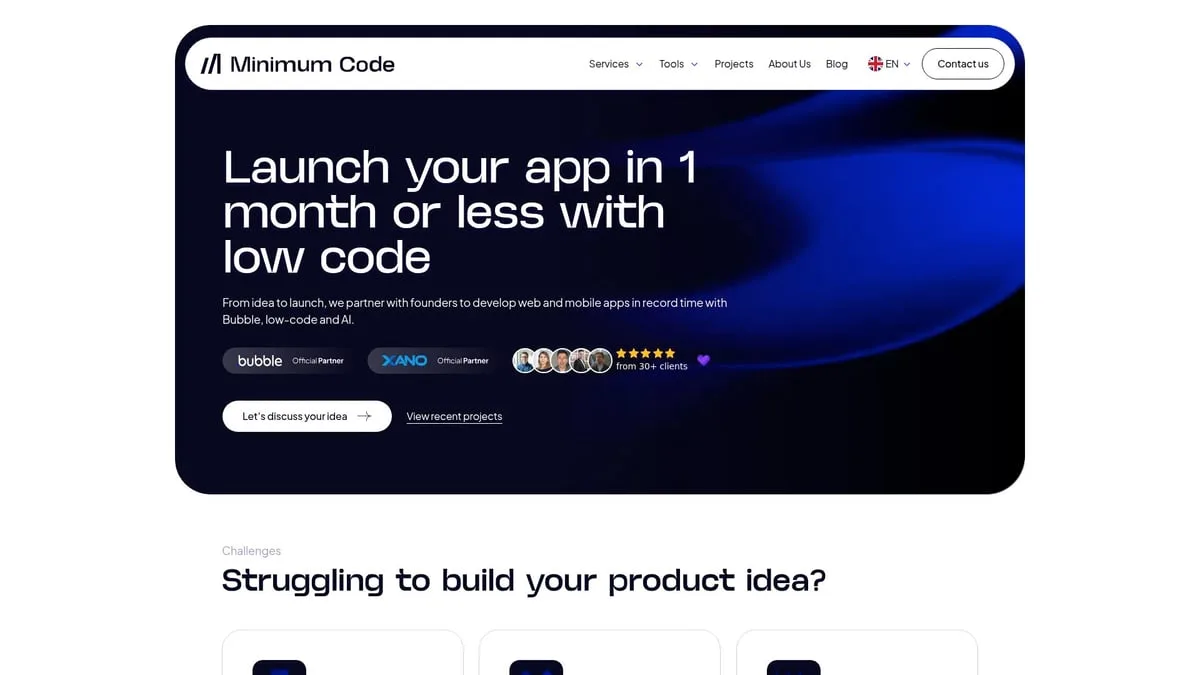
With expert agencies handling discovery, design, development, and launch, founders can expect transparent pricing, modern UX, and built-in GDPR compliance. For example, a fintech startup in Europe launched a fully compliant app using Bubble.io in under two months, saving both time and money.
Step-by-Step Guide: Estimating Your Mobile App Development Budget
Budgeting for your next app project can feel overwhelming, especially with so many unknowns. Yet, a clear, step-by-step approach will help you take control of the cost of mobile app development 2026 and avoid nasty surprises. Let's break down each stage in plain language, so you can plan confidently and build with certainty.

Step 1: Define your app's core features and requirements
Start by mapping out what your app must do. Divide your list into essentials and nice-to-haves. For a minimum viable product (MVP), focus on features that solve your users' main problem.
For example, if you're building a marketplace, essentials might include user sign-up, messaging, and payments. Features like detailed analytics or custom avatars can wait for later releases.
This clarity is key to controlling the cost of mobile app development 2026. The more features you add, the more your budget grows. Prioritise ruthlessly in the early stages.
Step 2: Choose your development approach and platform
Next, decide how and where your app will be built. Will you go native (iOS, Android), cross-platform (Flutter, React Native), or use a low-code/no-code solution?
Native apps offer the best performance but are more expensive, especially if you need both iOS and Android. Cross-platform tools can save you up to 30 percent. Low-code platforms are ideal for fast launches and limited budgets.
Think about where your users are and what devices they use. This decision impacts the cost of mobile app development 2026 from day one.
Step 3: Research and compare developer rates
Development costs vary widely by team type and location. Agencies in Western Europe often charge €80 to €150 per hour, while freelancers typically cost €40 to €80 per hour. Eastern European rates can be lower, but vet expertise carefully.
Outsourcing can offer quality and savings. For founders targeting Germany, reviewing Top Bubble.io agencies in Germany provides insights into professional options for mobile projects.
Always check portfolios, references, and communication skills. The cost of mobile app development 2026 will depend on who you hire and how you manage the relationship.
Step 4: Factor in design, compliance, and infrastructure
Don't overlook design, privacy, and backend costs. Custom UI/UX design often requires dedicated designers and tools like Figma. Multilingual support or accessibility features can add 10 to 15 percent to your design budget.
Compliance is a must in Europe. Budget for GDPR requirements if you handle user data. Backend infrastructure, such as cloud hosting and data storage, is another core expense. For backend comparisons, see Backendless vs Xano for app backend.
Each of these areas directly affects the cost of mobile app development 2026, so plan carefully.
Step 5: Account for testing, launch, and post-launch support
Testing ensures your app works smoothly and meets user expectations. Allocate funds for quality assurance, beta testing, and fixing bugs.
Launching in app stores comes with fees and compliance checks. After launch, expect to spend 15 to 20 percent of your initial budget on yearly maintenance for updates, bug fixes, and new features.
Factoring ongoing support into the cost of mobile app development 2026 protects your investment and keeps users happy.
Step 6: Build a contingency buffer
Unexpected costs are common. Feature creep, third-party changes, and delays all add up. Set aside a buffer of 10 to 20 percent of your total budget.
This extra margin ensures you can respond quickly if something changes. It is a simple but vital step for controlling the cost of mobile app development 2026.
Example budget breakdowns for typical app types
Here's a quick snapshot of what you might expect to spend, depending on your app's complexity:
App TypeEstimated Budget (€)Typical ApproachSimple MVP10,000–30,000Low-code/no-codeMedium Complexity30,000–80,000Cross-platform/nativeComplex App80,000–200,000+Native/custom
Remember, these figures cover the main phases, but ongoing costs remain. The cost of mobile app development 2026 varies by features, platform, and team.
Tips for cost optimisation
By following these steps, you will make smarter decisions and keep the cost of mobile app development 2026 under control. Ready for expert support? Contact the Minimum-Code team for tailored advice on your next app project.
Hidden and Ongoing Costs to Watch For
Budgeting for the cost of mobile app development 2026 does not end with launch. Many founders underestimate the hidden and ongoing costs that can impact your bottom line long after you go live. Without careful planning, these expenses can surprise even the most prepared teams.
Watch on YouTube: Hidden and Ongoing Costs to Watch For
Maintenance and updates
After launch, regular maintenance is essential. Updates for new iOS and Android versions, security patches, and bug fixes are ongoing requirements.
Factoring maintenance into your cost of mobile app development 2026 helps avoid unpleasant surprises and ensures your app stays compliant and functional.
Third-party services and integrations
Many apps rely on external APIs, analytics tools, cloud storage, and payment gateways. These services often charge ongoing monthly or usage-based fees.
Always review integration pricing when estimating the cost of mobile app development 2026.
App store fees and compliance renewals
Publishing on Apple App Store and Google Play means annual fees and compliance renewals.
These fees should be part of your ongoing cost of mobile app development 2026 calculations.
Scaling and performance improvements
If your app succeeds, infrastructure and performance costs can rise fast.
Planning for scaling helps you manage the cost of mobile app development 2026 as your business grows.
Marketing and user acquisition
Getting users is rarely free. Budget for marketing, app store optimisation, and user onboarding.
Marketing spend is a real part of the cost of mobile app development 2026, not just a nice-to-have.
Data storage and privacy management
Apps handling user data must invest in secure storage and privacy tools.
Ignoring these costs can put your business at risk and inflate the true cost of mobile app development 2026. Now that you have a clearer picture of what really drives mobile app development costs in 2026—from platform choices and compliance requirements to the advantages of using tools like Bubble io—you might be wondering how these factors apply to your own idea. Every project is unique, and it's easy to overlook important details when planning your budget. If you'd like tailored advice on building a secure, scalable app fast and cost effectively, we're here to help. Let's talk through your needs and explore the best approach for your goals—Book a free discovery call.

Written by Tom
Founder and Lead Developer

Ready to start your project?
Book a free discovery call to learn how we can build your app in 4 weeks, or less.
Book a call