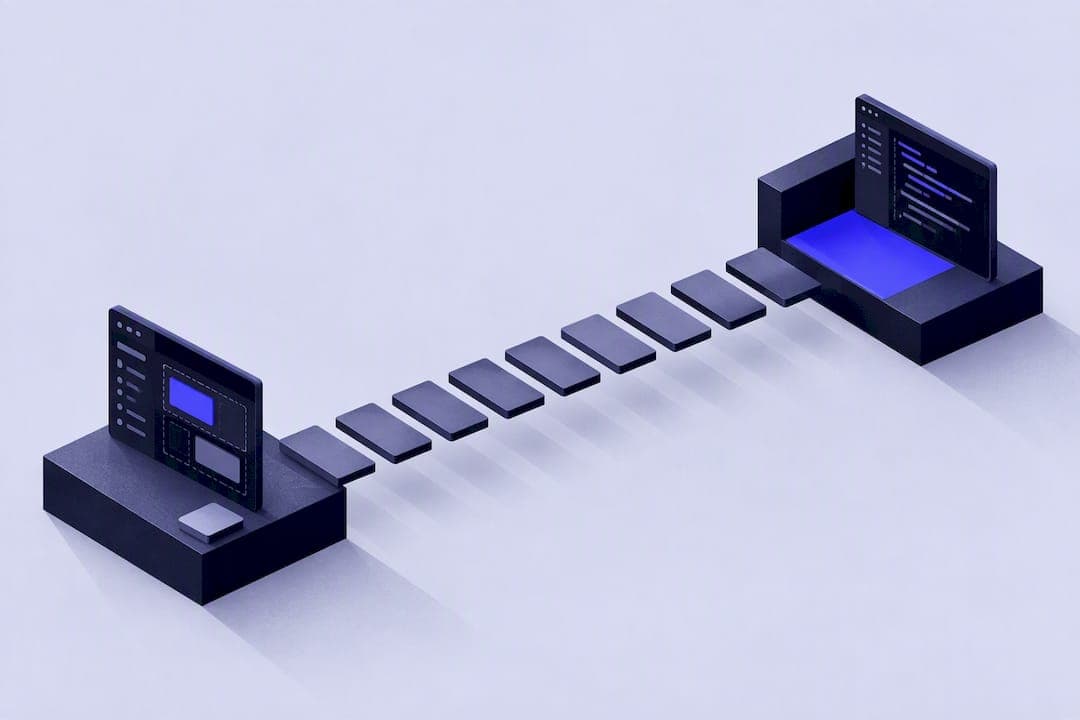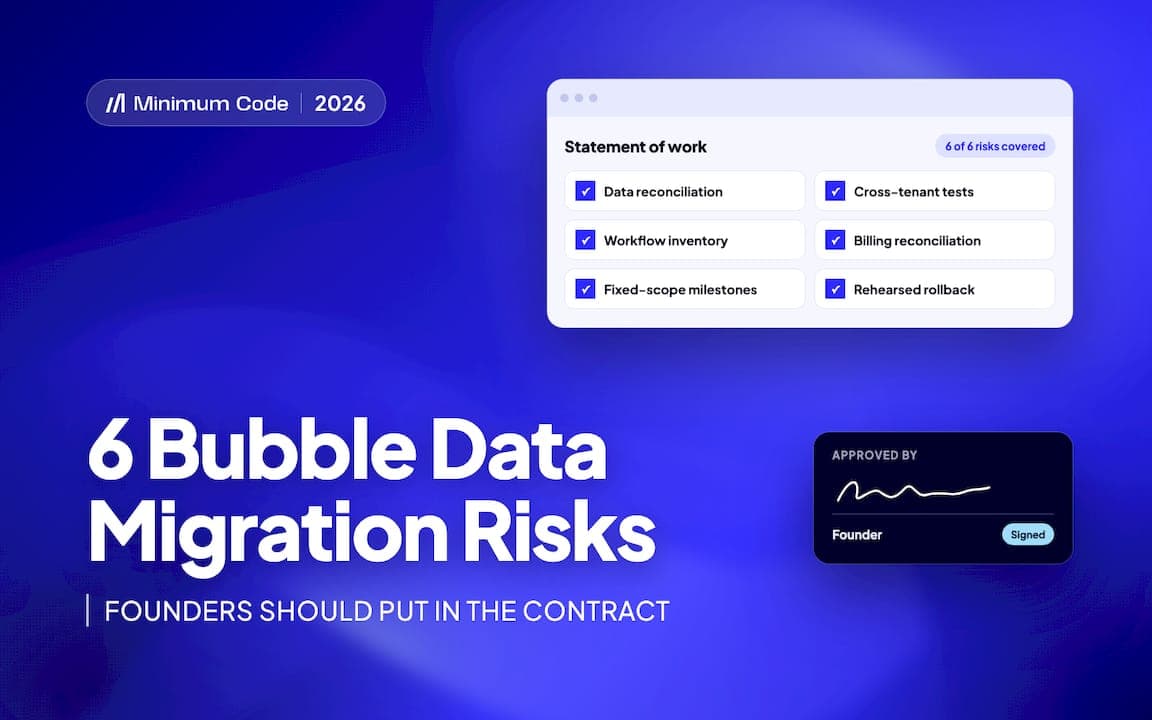

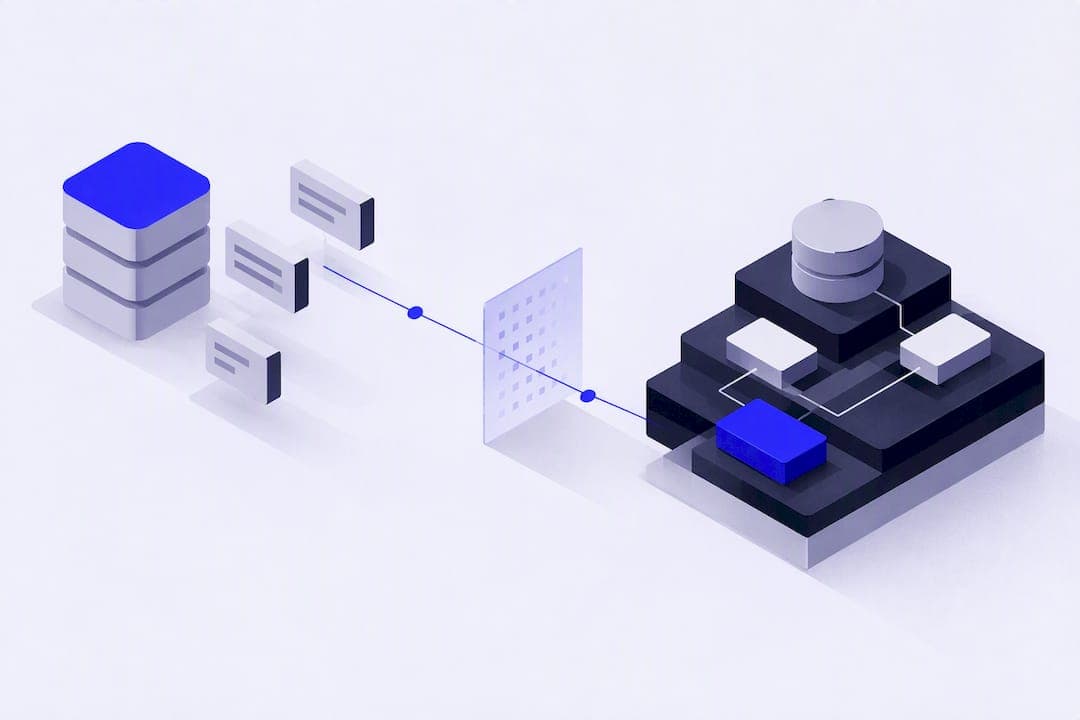
Supabase works well as a Bubble replacement backend when you need real SQL, row-level data control or EU-only hosting, and less well when your app’s logic still fits Bubble’s workflow engine. The deciding factor is whether your data model and compliance needs have outgrown what Bubble’s built-in database and privacy rules can express. Below, we map the concrete pieces: tables, policies, auth, storage and the engineering work that remains after the migration.
TL;DR:
- Migrating from Bubble to Supabase requires extensive policy writing for row-level security and testing, which accounts for most of the migration time and risk.
- Supabase excels for apps needing proper SQL joins, custom authentication flows, and strict EU data residency, but demands ongoing maintenance of policies, background jobs, and observability.
- The data mapping involves converting Bubble Things into Postgres tables and translating privacy rules into explicit RLS policies, which must be tested thoroughly before full deployment.
- Choosing exact AWS regions and requesting GDPR-specific documentation ensures compliance and residency, but can impact latency depending on user location.
- Supabase provides the core database, auth, and storage, but app logic, background processing, and monitoring remain responsibilities of the developer.
Key takeaways
- Supabase suits apps that need proper SQL joins, custom authentication flows or strict EU data residency.
- It’s a weaker fit if your team has no engineering capacity to maintain Postgres policies, background jobs or monitoring.
- Planning and testing typically take longer than the actual data move, something confirmed in independent migration accounts from Bubble teams.
- Supabase gives you Postgres, Auth, Storage, Edge Functions and Realtime, but business logic, queueing and observability remain yours to build.
- Start with an audit of your Bubble data structure and privacy rules, then run a pilot sync before committing to a full cutover.
How do Bubble things map onto Supabase tables?
Every Bubble Thing becomes a Postgres table, and every field becomes a column with a proper SQL type instead of Bubble’s generic field types. This is the first real gain: foreign keys, constraints and indexes that Bubble’s visual editor never exposed directly.
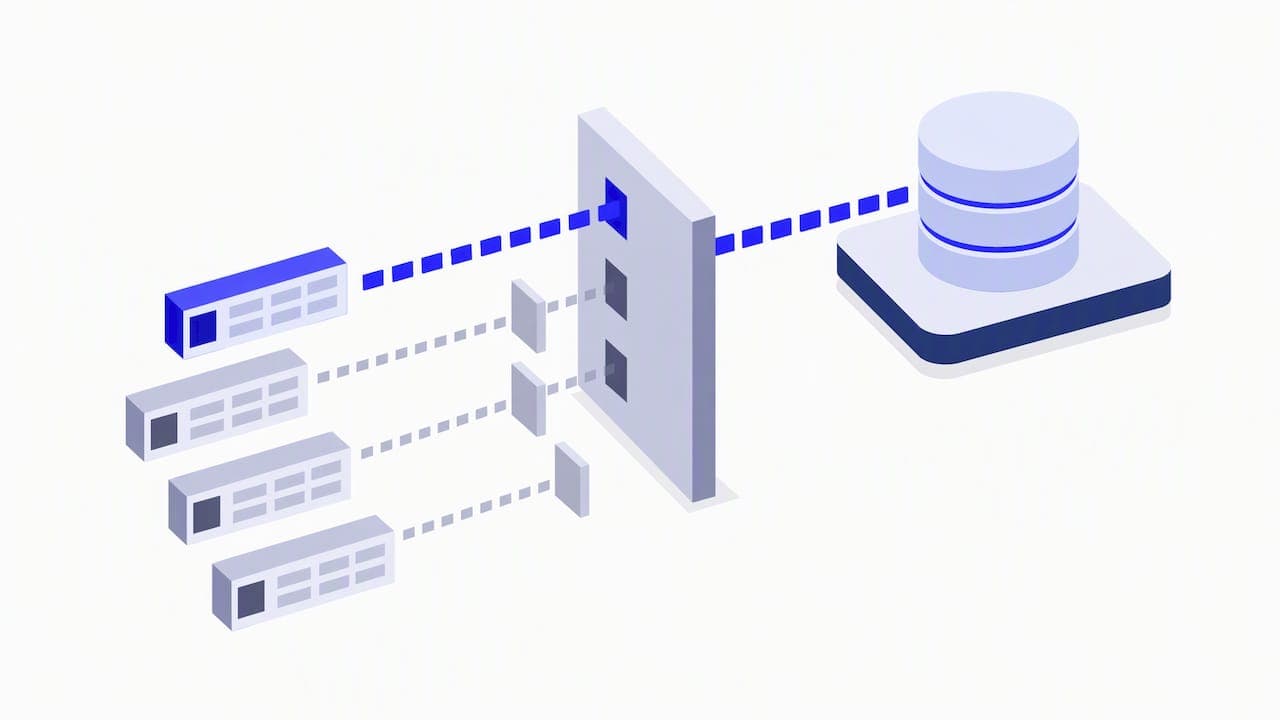
Bubble’s privacy rules, the per-type rules that decide who can see or edit a record, translate into row level security (RLS) policies written in SQL. Where Bubble let you tick a box and pick a condition, Postgres asks you to write a policy per operation (select, insert, update, delete) using the auth.uid() helper function to check which user is making the request.
The rest of the mapping follows a similar pattern:
- Auth: Bubble’s session cookies become Supabase Auth’s JSON Web Tokens, issued on login and checked by every RLS policy automatically.
- Storage: Bubble file fields become objects in Supabase Storage buckets, accessed through signed URLs rather than a public file field.
- Realtime: Bubble’s live data binding becomes Supabase Realtime channels, which can be locked down with the same RLS logic applied to a dedicated messages table for broadcast and presence control.
Pro Tip: Write one RLS policy per Bubble privacy rule before you migrate a single row. It forces you to notice the edge cases Bubble’s rule editor let you skip.
What’s the best way to migrate the data itself?
Most teams run a one-time export, then layer in a sync mechanism while the Bubble app stays live. The right sequence depends on how much downtime your users will tolerate.
- Export and map: Pull Bubble data via the Data API or a bulk export, then map each Bubble type to its Postgres table, checking field types and relations as you go.
- Choose a sync method: Webhooks give near-real-time updates for small changes, scheduled jobs suit batch syncs, and change data capture suits high-volume tables where you can’t afford to miss an event.
- Decide on two-way sync: If you keep the Bubble front end running during transition, you need writes to flow both directions, which adds complexity but lets you cut over gradually rather than all at once.
- Verify before cutover: Run idempotent imports so re-running a sync never duplicates rows, check referential integrity across foreign keys, and keep a rollback plan in case the new backend misbehaves under real traffic.
A gradual migration that kept the Bubble front end running while the backend moved to Next.js and Supabase is one documented example of this staged approach reducing risk without a full rewrite.
How do you secure data once it’s in Postgres?
You secure it by enabling RLS on every table, revoking the default public grants, and writing a policy for each operation rather than relying on a single blanket rule. Supabase’s own guidance treats this as mandatory, not optional, for any table holding user data.
- Enable RLS on each table and write explicit policies for select, insert, update and delete rather than one catch-all rule.
- Test policies with
supabase test dband pgTAP, asserting both allow and deny cases for anonymous and authenticated users. - Combine RLS with
auth.uid()checks to replicate the per-row logic Bubble’s privacy rules used to handle. - Remember that RLS runs in the database itself, so it protects data even if a different tool queries Postgres directly, giving you defence in depth that application-only checks don’t.
Supabase holds SOC 2 Type 2 certification, with the audit report available to Team and Enterprise customers. That covers controls over the Supabase product environment itself, not your application logic, logging or backup strategy, which stay your responsibility.
Does Supabase help with GDPR and EU hosting?
Yes, if you pick the right region and request the paperwork. Each Supabase project runs in a single primary region, and you can choose an exact AWS region such as Frankfurt, Ireland or Paris rather than a broad region group, which matters when a client or regulator asks exactly where data sits.
- Pick an exact AWS region (for example
eu-central-1oreu-west-3) when strict residency matters, rather than a general region grouping. - Request a Data Processing Agreement directly from Supabase to support your own GDPR obligations.
- Edge Functions can be pinned to a region too, using the
x-regionheader or theforceFunctionRegionfallback, which keeps function execution close to your data rather than running wherever the nearest edge node happens to be. - Pinning everything to one exact region can add latency for users far from it, so weigh residency needs against performance before locking the choice in.
What do you still have to build yourself?
Supabase gives you a database, auth and storage, but it doesn’t give you an application. Business logic, the rules that decide what happens after a user submits a form, still needs writing in code, usually inside Edge Functions or your own API layer.
- Background jobs at scale, like nightly reports or bulk notifications, need a queue or scheduler Supabase doesn’t provide out of the box.
- Complex authorisation beyond row-level checks, such as role hierarchies or delegated permissions, needs its own design layer on top of RLS.
- Observability, meaning logs, alerts and long-term backup retention, needs separate tooling and a plan for who watches it.
- High-throughput analytics or workloads handling protected health information often need additional managed services or stricter controls than a default Supabase setup provides.
If your app is a simple internal tool or an early prototype without SQL, auth, or data residency needs, continuing to use Bubble may remain a sensible option for now.
How Minimum Code handles this
We run Bubble to Supabase migrations as a fixed-fee, fixed-scope engagement, with no downtime during the cutover and 60 days of free support after launch. Experienced engineers own the architecture, the RLS policies and the testing, while AI coding tools speed up the implementation work without cutting corners on review.
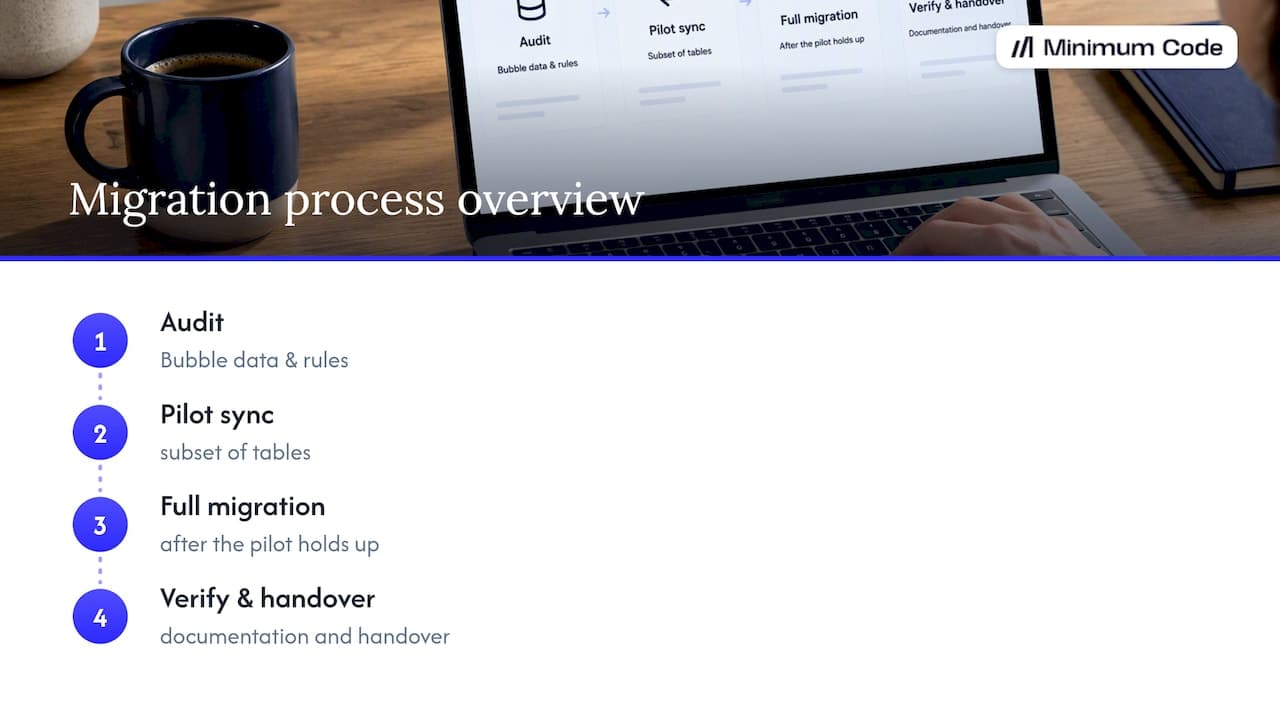
A typical engagement runs through an audit of your current Bubble data and rules, a pilot sync on a subset of tables, the full migration once the pilot holds up, then verification and handover with documentation.
Our take on Bubble to Supabase migrations
The part most guides underplay is how much of this work is policy writing, not data moving. Exporting rows from Bubble and loading them into Postgres is the easy half of a weekend. Translating every Bubble privacy rule into a tested RLS policy, one that denies the right requests as reliably as it allows the right ones, is where the real time goes, and it’s also where most of the eventual bugs would have hidden if skipped.
The conventional advice to “just export your data and point Supabase at it” undersells the risk of shipping an authorisation gap straight into production. A policy that looks correct on paper can still let an authenticated user read someone else’s row if the auth.uid() check is written loosely. Test every allow and deny case before you trust the new backend with real users, not after.
If you take one thing from this, prioritise the privacy rule mapping before the UI rebuild. Everything else can be fixed later. A data leak cannot.
— Tom
Thinking about making the move
If the mapping above looks right for your app, we offer a Bubble to code migration built around exactly this kind of handover: fixed price, fixed scope, no downtime while we cut over, and 60 days of support once your app is live on the new backend.
We also take on the work around the migration itself: product strategy when the move is a good moment to rethink a feature, UI/UX design in Figma when the front end needs a refresh alongside the backend, and legacy app modernisation when the app predates Bubble entirely. Our engineers started on Bubble in 2022 and still hold Bubble Gold agency status, so the advice you get on whether to move at all comes from people who have maintained Bubble apps as well as migrated them.
If an audit of your current app and privacy rules sounds like the right next step, get in touch and we’ll tell you honestly whether Supabase fits your case before any contract is signed.
FAQ
Is Bubble.io still relevant in 2026?
Yes, Bubble remains a reasonable choice for prototypes, internal tools and early-stage products that don’t yet need custom SQL, heavy background processing or strict data residency. Many teams run successful products on it for years before any migration becomes necessary.
Which is better, Glide or Bubble?
The two serve different needs: Glide suits simple, mobile-first apps built from a spreadsheet, while Bubble handles more complex workflows, custom logic and a proper relational-style database. Neither replaces a coded backend like Supabase once an app needs real SQL or row-level security.
Is Bubble.io actually a good platform?
Bubble is a capable no-code platform for building and launching web apps quickly without writing code, and it remains a sound starting point for many founders. Its limits tend to show up around performance at scale, SEO control and granular data permissions, which is when teams start looking at a coded backend.
How do you migrate to Supabase from Bubble?
A typical path starts with exporting your Bubble data and mapping each Thing to a Postgres table, followed by writing row level security policies that replicate your Bubble privacy rules. Most teams then run a pilot sync on a few tables before committing to a full cutover, since planning and testing take longer than the data move itself.
Does Supabase support GDPR compliant hosting in the EU?
Yes, Supabase lets you pin a project to an exact EU AWS region, such as Frankfurt or Ireland, and provides a Data Processing Agreement on request to support your own GDPR obligations. The platform also holds SOC 2 Type 2 certification, though application-level controls stay your responsibility.
Recommended

Written by Tom
Founder and Lead Developer

Ready to start your project?
Book a free discovery call to learn how we can build your app in 4 weeks, or less.
Book a call