
Launching a marketplace is one of the most complex product challenges a startup can take on. You're building a platform that needs to work for buyers, sellers, and admins simultaneously, from day one. That's a harder problem than most people expect.
The good news is that no-code has fundamentally changed what's possible. What used to require a development team, six months, and a six-figure budget can now be done in weeks with tools like Bubble.io, without sacrificing functionality or scalability.
This guide walks you through everything you need to know to launch a marketplace the right way: validating your idea, choosing the right model, building your MVP, and getting your first users.
What kind of marketplace are you building?
Before you write a single workflow or design a single screen, you need to answer this question clearly. The architecture of your marketplace depends entirely on the model you choose.
The most common types are:
Product marketplaces connect buyers with sellers of physical or digital goods. Think Etsy, Amazon, or niche equivalents in specific verticals like handmade furniture, vintage clothing, or B2B supplies.
Service marketplaces connect users with providers for tasks, appointments, or expertise. Fiverr, Upwork, and local services platforms like Treatwell all follow this model.
Peer-to-peer marketplaces facilitate transactions directly between individuals, without a traditional vendor. Airbnb and Vinted are the clearest examples.
B2B marketplaces focus on business-to-business transactions, supplier directories, wholesale platforms, agency marketplaces. These tend to have longer sales cycles but higher transaction values.
Your choice shapes everything downstream: your revenue model, your user roles, your trust and safety requirements, and your data structure. If you try to start building without this clarity, you'll waste weeks reworking decisions that should have been made upfront. Minimum Code's Product Discovery process exists precisely to help founders work through this before a single line of logic is written.
Validate before you build
The most common and most expensive mistake marketplace founders make is building too early. A marketplace has the classic chicken-and-egg problem: buyers won't come without sellers, and sellers won't come without buyers. If you haven't figured out how to crack that before launch, you're in trouble.
Validation doesn't require a finished product. It requires proof that both sides of your marketplace have a real problem and that your platform is the right solution.
Some practical ways to validate:
- Manual first. Run the marketplace manually before automating anything. Match buyers and sellers yourself over email or WhatsApp. If people transact, you have a real use case.
- Landing page test. Build a simple landing page, drive traffic to it, and measure sign-up intent from both buyers and sellers. If nobody opts in, the product-market fit isn't there yet.
- Talk to 20 potential users. Not surveys, actual conversations. Ask about their current workflow, what's broken, and what they'd pay to fix it.
If validation shows demand on both sides, you're ready to build. If it doesn't, you've saved yourself months of effort.
The core features your MVP actually needs
A mistake founders make when building marketplace MVPs is over-scoping. You don't need every feature on day one. You need the minimum set of features that makes a transaction possible, and nothing more.
For almost every marketplace model, that means:
User roles and onboarding. Buyers and sellers need separate onboarding flows. Sellers typically need more verification: payment setup, profile details, and in some cases KYC (Know Your Customer) checks if you're operating in regulated categories.
Listings. Sellers need to be able to create, edit, and manage their listings. Buyers need to be able to search, filter, and browse them. The search and filter logic is often where no-code apps get slow if the database isn't structured well from the start, this is worth getting right early.
Transactions and payments. Stripe is the standard for marketplace payments. For two-sided marketplaces, Stripe Connect handles payouts to sellers and commission collection for the platform. Getting the escrow and payout logic right is critical, don't cut corners here.
Messaging. Buyers and sellers almost always need to communicate before or during a transaction. Even a basic inbox goes a long way toward building trust and reducing failed transactions.
Reviews and ratings. Trust is the currency of any marketplace. A simple two-way review system after each transaction pays dividends immediately in user retention and conversion.
That's it for an MVP. Features like recommendation algorithms, advanced analytics, subscription tiers, and dispute resolution flows can come later, once real users are telling you what they actually need.
Why no-code is the right choice for marketplace launches
Building a marketplace with traditional development is slow and expensive. A custom-coded two-sided platform with all the features above typically takes six to twelve months and costs well over €100K to build properly. Most early-stage startups can't afford that runway before validating their model.
Bubble.io changes the equation. It's a visual development platform that handles frontend, backend, database, and workflows in one place, without writing code. For marketplaces specifically, it's particularly well suited because it supports complex user roles, relational databases, third-party API integrations (including Stripe Connect), and responsive design out of the box.
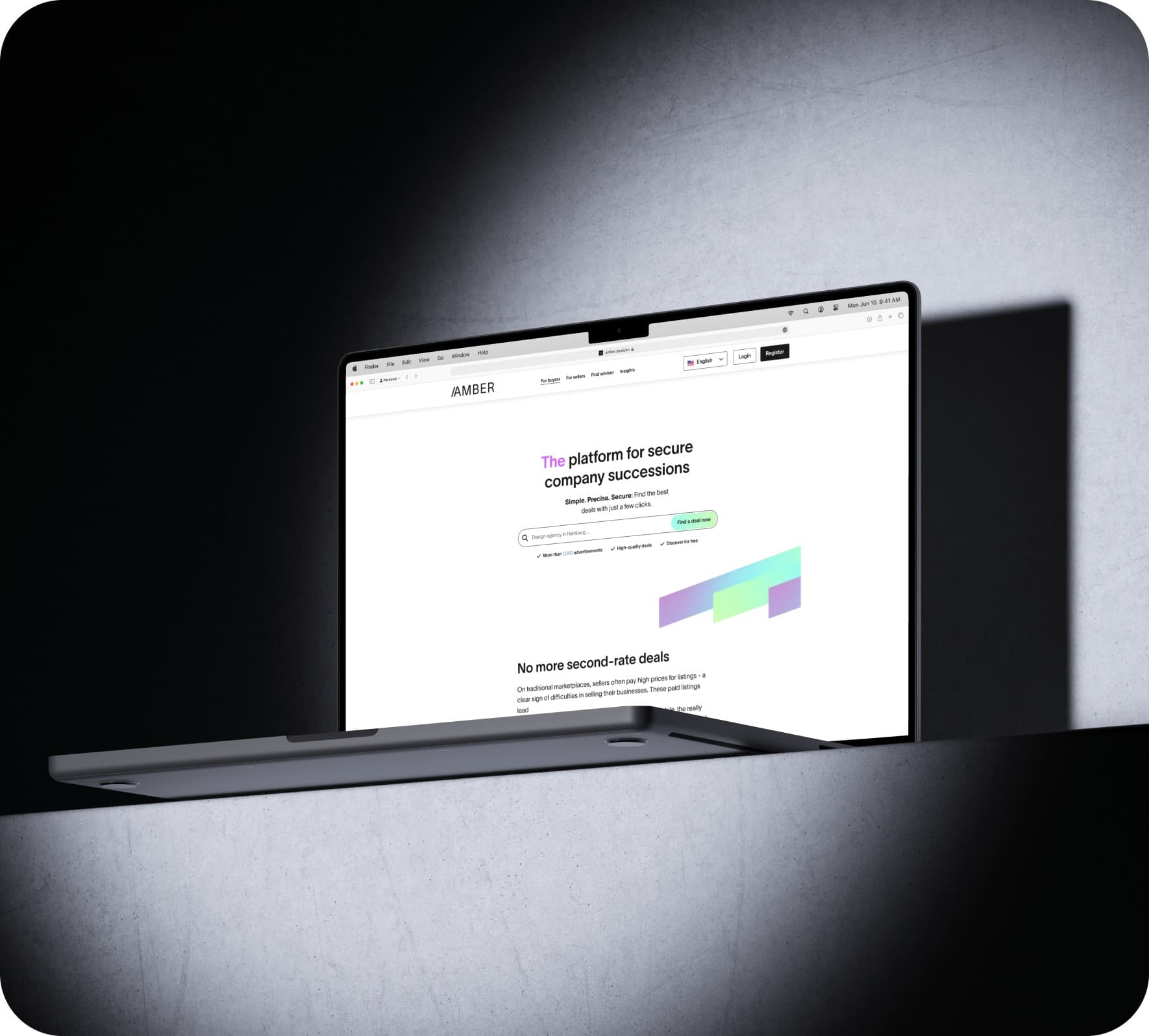
The practical result is that a well-scoped marketplace MVP can be built in four to eight weeks at a fraction of traditional development costs. Minimum Code has built and optimized several marketplace platforms on Bubble, including a business buyers marketplace connecting buyers, sellers, and agents across the UK, the Expeerly content marketplace for brand video sourcing, and a global moderation platform connecting research agencies with verified moderators worldwide.
There are trade-offs to be aware of. Bubble has a vendor lock-in model, you can't export your code. For startups at the MVP and early-growth stage, this is rarely a problem. For platforms expecting massive scale from day one, it's worth planning for. Performance can also become a bottleneck if your database structure and workflows aren't optimized correctly, this is where working with a Gold Bubble agency makes a significant difference.
How to structure your build
Once you've validated your model and scoped your MVP features, the build itself follows a clear sequence.
Start with your data model. Define your tables, users, listings, transactions, messages, reviews, and map the relationships between them before touching the design. A messy database is the single biggest source of performance problems and rework on Bubble projects. Get a second opinion on it if you can.
Design before you build. UI/UX design isn't a nice-to-have for marketplaces. Both buyers and sellers need interfaces that are intuitive enough to use without instruction. Minimum Code's UI/UX design process produces responsive, user-tested designs before development starts, which significantly reduces rework during the build phase.
Build authentication and onboarding first. Everything else depends on users existing in the system with the right roles and permissions.
Build listings and search next. This is the core value loop: sellers create, buyers find. Make sure your search constraints and filters work correctly and don't degrade performance as listings scale.
Add payments and workflows. Stripe Connect integration in Bubble is well-documented and reliable. Map your full payment flow, charge, escrow, payout, refund, before building it, and test every scenario before going live.
Add messaging and reviews last. These are important but they don't block your first transaction. Ship them before you open to the public, but don't let them delay your MVP timeline.
Getting your first users
Building the platform is the easier half of the problem. Traction is harder.
For most marketplaces, the fastest path to early supply is to manually onboard your first 20 to 50 sellers before you open to buyers. Reach out directly. Offer to set up their profiles for them. Make it effortless to join. Once you have a critical mass of supply, buyers have a reason to show up.
On the demand side, start with the most targeted channel you can find. A marketplace for restaurant suppliers in Germany should start in German restaurant owner communities, not on Google Ads. Niche distribution almost always beats broad distribution at the early stage.
Don't try to grow both sides simultaneously at first. Pick the harder side (usually supply) and fill it manually before opening the floodgates on the other.
Timeline and cost expectations
For a no-code marketplace MVP built on Bubble.io, realistic timelines look like this:
- Discovery and scoping: 1–2 weeks
- UI/UX design: 1–2 weeks
- Development: 3–5 weeks
- Testing and QA: 1 week
- Total to launch: 6–10 weeks
Cost ranges vary depending on complexity, but a typical marketplace MVP built with a no-code agency sits between €8,000 and €25,000. Ongoing costs include Bubble hosting (from approximately €25/month), Stripe processing fees, and maintenance.
Compared to traditional development, this represents a 3x to 5x reduction in both time and cost, with the ability to iterate rapidly based on real user feedback post-launch. Minimum Code's no-code web app development service covers the full build lifecycle from discovery to launch.
FAQs - Frequently asked questions
How long does it take to launch a marketplace from scratch?
With no-code tools and a clear scope, a marketplace MVP typically takes six to ten weeks from discovery to launch. Custom-coded platforms take significantly longer, often six months or more.
Do I need technical skills to launch a marketplace with no-code?
No. Platforms like Bubble.io are designed for non-technical founders. That said, working with an experienced no-code agency reduces risk significantly, particularly around database structure, payment logic, and performance optimization.
What's the best tool for building a marketplace in 2026?
Bubble.io is the most capable no-code platform for two-sided marketplaces. It handles complex user roles, relational databases, API integrations, and responsive design in one environment. For most marketplace MVPs, it's the right starting point.
How do I handle payments in a two-sided marketplace?
Stripe Connect is the standard solution. It handles buyer charges, platform commission, and seller payouts in a compliant, well-documented way. Most Bubble marketplace builds use a dedicated Stripe plugin to integrate this.
What's the chicken-and-egg problem and how do I solve it?
Every marketplace faces the challenge of needing both buyers and sellers to provide value to either. The most reliable solution is to manually build supply first, onboard sellers directly before opening to buyers, so that when buyers arrive, there's already something to find.
Can I launch a marketplace in Europe and stay GDPR compliant?
Yes. Bubble offers GDPR-compliant hosting options and built-in privacy and security features. Working with a team that understands EU data requirements is important if you're targeting European users. Minimum Code is based in Germany, Austria, and the UK and builds with compliance in mind from day one.
The code to no-code
Turn your marketplace idea into a product. Book a free discovery call with our founder Tom to get a no-code assessment and scope estimate for your project.

Written by Tom
Founder and Lead Developer

Ready to start your project?
Book a free discovery call to learn how we can build your app in 4 weeks, or less.
Book a call