
A product requirements document (PRD) is a concise, testable specification that tells a team what to build and how you’ll know it’s done, drawing on the standard definition Wikipedia uses for the artifact. Write one whenever you’re handing a feature to another team, briefing an external contractor, or coordinating more than one function on the same release. Skip the full document for a single-person tweak or a change so small that a Slack message and a ticket cover it. Industry experts and the source material behind this guide all converge on the same point: a PRD earns its place only when it creates a shared understanding that wouldn’t exist otherwise.
TL;DR:
- A PRD should include a clear, falsifiable problem statement with specific baseline metrics and targets to ensure focus and measurability.
- Non-goals with reasons are essential to prevent scope creep and keep the team aligned on what will not be addressed.
- Prioritized user stories with acceptance criteria should be defined early, with functional requirements listed after, to guide development effectively.
- The build order in the PRD must surface the riskiest dependencies first for fast failure and better risk management.
- Use a concise, one-page format for internal teams with shared context, and a full template for external contractors or formal approval processes.
Core Components Every Product Requirements Document Needs
A PRD is only as useful as its weakest section. Skip one of these and you’ll spend the next sprint answering questions the document should have settled.
- Header and metadata: owner, status, version, last updated date, and links to related docs.
- Problem statement: what’s broken today, stated with a baseline number and a target, not a feeling.
- Goals and success metrics: measurable outcomes, tied to the baseline above, with a date attached.
- Non-goals or out-of-scope items: explicitly listed, each with a one-line reason it’s excluded.
- Users and personas: who this is for, plus the two or three scenarios they’ll actually hit.
- User stories with acceptance criteria: written in a Given/When/Then structure so engineering and QA can verify them without guessing.
- Functional requirements: features sorted by priority, typically must-have, should-have, and could-have.
- Non-functional requirements: performance, security, accessibility, and any regulatory constraints.
- Dependencies and integrations: other teams, APIs, or vendors this work relies on.
- Milestones and build order: the sequence of work, with the riskiest piece surfaced first.
- Open questions and owners: unresolved items with a name attached to each one.
- Appendix and change history: research links, mockups, and a running log of edits.
Harvard Business Review’s collaboration research makes a point worth repeating here: the best product managers use documents like this to build alignment, not to prove technical thoroughness. A PRD stuffed with implementation detail and thin on measurable goals fails at its actual job.
PRD vs BRD vs MRD: Which Document Do You Actually Need?
A market requirements document (MRD) answers “is there a market for this?” A business requirements document (BRD) answers “what does the business need, and who’s funding it?” A PRD answers “what exactly are we building, and how do we know it’s right?” Confusing these three is one of the most common reasons projects stall in approval limbo.
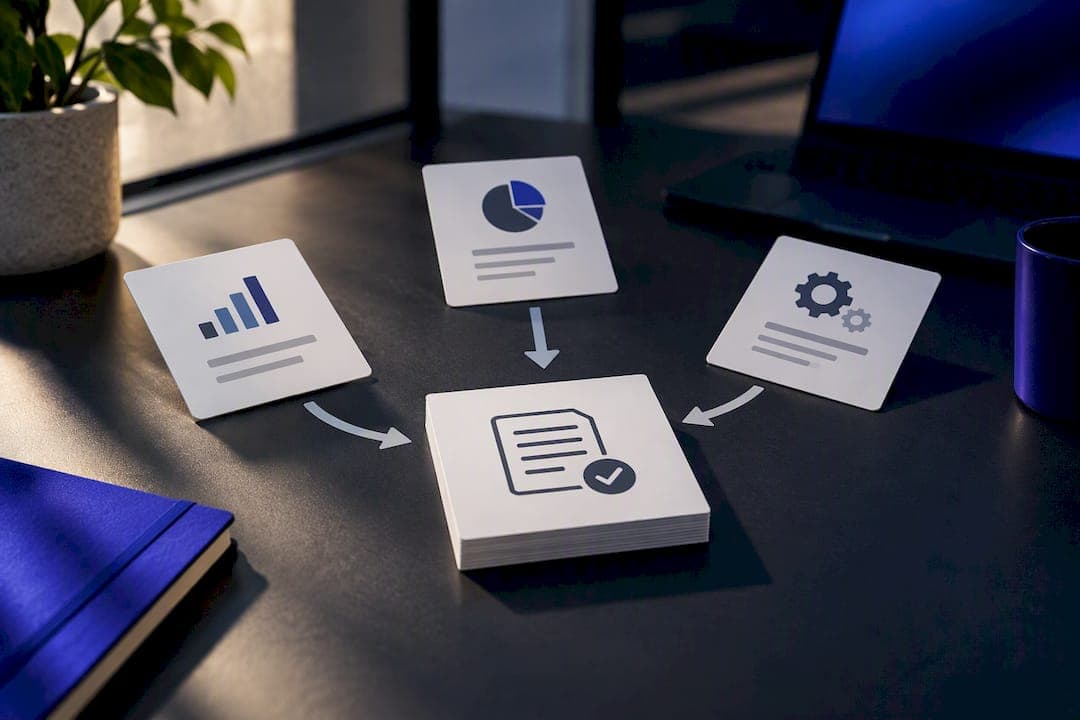
The BRD vs PRD comparison from Clearly draws the audience line clearly: a BRD is written for executives and stakeholders who control budget, while a PRD is written for engineering and product teams who build the thing. The MRD sits earlier still, usually authored by product marketing or a research function, and it rarely reaches an engineer’s desk at all.
A few practical rules for choosing:
- If your organization has a formal procurement or funding-approval gate, write the BRD first. Skipping it means someone above you eventually asks for it anyway, after the work has already started.
- If you’re a small team without a formal approval process, a well-written PRD often absorbs what a separate BRD or MRD would have covered, since Clearly’s own guidance notes a strong PRD frequently replaces both in lean organizations.
- Sequence matters more than headcount. MRD establishes market rationale, BRD locks funding and business terms, PRD translates both into buildable specs. Running them in reverse order creates rework.
- Never write a PRD for an audience that actually wants a BRD. A VP asking “why should we fund this” doesn’t want a Given/When/Then acceptance table. They want a business case.
Startups frequently merge all three into one lightweight document. That’s fine, as long as the merged version still answers each of the three underlying questions somewhere in its text.
How Do You Write a PRD Step by Step?
Before you open a blank document, gather evidence. Pull customer feedback, usage metrics, and sales or support notes, and confirm there’s an actual decision gate this PRD needs to clear. A structured approach to collecting that evidence, like the tactics in this guide to gathering customer feedback, keeps your problem statement grounded instead of speculative. Research on feedback-driven prioritization also links structured customer input directly to revenue growth outcomes, which is a useful argument when you need to justify the time a PRD takes.
- Write a falsifiable problem statement. State the baseline metric and what’s wrong with it in one or two sentences. If nobody could prove the statement false, it’s not specific enough.
- List non-goals with reasons. This single move prevents more scope creep than any other line item in the document.
- Define personas and priority scenarios. Name the person, not the segment. “Sarah, a solo freelancer managing 12 clients” beats “SMB users.”
- Write user stories with machine-checkable acceptance criteria. A criterion like “detect cancellation within five minutes” can be tested; “handle cancellations well” cannot.
- List functional requirements and prioritize them as P0, P1, or P2.
- Add non-functional requirements, dependencies, and constraints before anyone starts estimating.
- Set milestones and build order, surfacing the riskiest integration first so it fails fast if it’s going to fail at all.
- Run a cross-functional review loop and log every material change in the appendix.
Pro Tip: Draft the acceptance criteria before you draft the feature list. Working backward from “how will we verify this” forces specificity that a feature-first draft almost never gets on its own.
One-Page vs Full PRD: Templates and a Worked Example
A one-page PRD covers the problem, goal, top three user stories, and non-goals; use it for internal handoffs where the team already shares context. A full 12-section markdown template suits external contractors, formal sign-off processes, or any handoff where nobody in the room can fill gaps from memory.
A worked PRD example from ScoutR shows what a filled version actually looks like rather than a blank shell:
Section | Worked example content |
|---|---|
Objective | Cut checkout abandonment substantially within one quarter |
ICP | Maria, a returning customer buying on mobile |
P0 feature | One-click reorder from order history |
Acceptance test | Reorder completes in under 10 seconds with no re-entry of payment details |
Build order | Payment API validation first, since it’s the riskiest dependency |
- Choose the one-pager when the receiving team is in-house and already aligned on context.
- Choose the full template when the receiving team is external, contracted, or unfamiliar with prior decisions.
Common PRD Mistakes That Cause Rework
Most PRD failures trace back to the same handful of habits, and they’re fixable once you know to look for them.
- Prescribing implementation details. A PRD that dictates database schema or API structure is doing engineering’s job; leave that to design docs or RFCs, a boundary Techsy’s template guidance draws explicitly.
- Writing vague goals. “Improve onboarding” isn’t a goal. “Raise day-7 activation from 22% to 30% by end of Q3” is.
- Skipping non-goals entirely. Documenting non-goals with reasons is one of the highest-value moves per line of text in the whole document, because it kills the same argument before it starts twice.
- Burying the risky dependency. State build order early so the integration most likely to break gets attempted first, not last.
- Letting the document bloat. Cut empty sections. Move supporting research to the appendix instead of the body.
- Treating the PRD as a one-time artifact. Version it, assign an owner, and log every change.
Pro Tip: If a section of your PRD hasn’t changed in three review cycles, it’s either genuinely settled or nobody’s reading it closely enough. Either way, move it to the appendix.
How Minimum Code Applies PRDs to No-Code and Migration Work
No-code builds move faster than traditional development, so Minimum Code trims PRD length accordingly while keeping acceptance criteria just as strict. A Bubble build or a migration from Bubble to code still needs testable criteria; it just doesn’t need ten pages of functional spec for a feature that ships in a week.
- PRDs get paired with visual flows and prototypes, since text alone tends to hide UX breaks that a clickable flow exposes immediately.
- What belongs in the PRD versus what belongs in engineering’s own notes follows the same boundary covered in this breakdown of the product development cycle.
- Migration and modernization projects often emphasize the non-goals section, since scope creep during a rebuild is where budgets usually break.
Speed vs Completeness: The Real Trade-Off in Writing a PRD
The honest tension in every PRD isn’t structure. It’s how much you specify versus how much you leave to the people actually building it. A one-pager moves fast but assumes the team already shares context; a full 12-section document removes that assumption at the cost of a day or two of writing time. I’d rather see a team over-specify acceptance criteria and under-specify everything else, because vague criteria are what turn a two-week feature into a six-week argument. Sign-off gates should check the problem statement and the non-goals list, not every paragraph. Anything more than that just slows delivery without reducing risk.
— Valeriia
Turning Your PRD Into a Shipped Product
A finished PRD is a plan, not a product. Minimum Code exists for the gap right after you close that document, when someone has to actually build what it describes without blowing the budget or the timeline.
If your PRD calls for a new product strategy or a business case to get funded internally, that’s product strategy work Minimum Code handles directly, with a fixed scope agreed before work starts. If the document is ready and you need the flows and prototypes that pair with it, UI/UX design closes that gap before engineering ever opens an editor. And if the PRD points toward a full build, or a Bubble app that’s outgrown no-code and needs migration to code, that’s the exact handoff Minimum Code is built around: senior engineers, a transparent scope, and no surprise invoices halfway through. Keep the work internal when your team already has the bandwidth and context; bring in outside help when the PRD is solid but nobody’s free to execute it. Start by requesting a scope estimate on the product strategy page.
Sources
For deeper reading, the Wikipedia entry on PRDs gives the formal definition. Harvard Business Review’s piece on product manager collaboration explains why alignment beats exhaustive spec. Clearly’s BRD vs PRD comparison untangles document sequencing. ScoutR’s filled PRD example and Techsy’s 12-section template both give copy-ready structures.
- Product requirements document — Wikipedia
- How great product managers facilitate collaboration — Harvard Business Review (Oct 2024)
- BRD vs PRD: What’s the Difference? (2026 Guide) — Clearly
- A Complete PRD Example (Filled In, Not a Blank Template) — ScoutR
- PRD Template + Worked Example (Markdown, 2026) — TECHSY
FAQ
What Is a PRD vs a BRD?
A PRD specifies what a product should do, written for engineering and product teams. A BRD defines the business case and funding rationale, written for executives, and Clearly’s comparison notes the BRD typically comes first when formal approval is required.
What Does an Example PRD Look Like?
A worked PRD names a measurable objective, a specific persona, prioritized P0 features with testable acceptance criteria, and explicit non-goals. The ScoutR example shows this filled in with an objective, an acceptance test, and a build order rather than a blank shell.
How Do You Create a PRD From Scratch?
Start by gathering evidence, then write a falsifiable problem statement with a baseline and target. From there, add non-goals, personas, prioritized requirements, and testable acceptance criteria before moving to milestones and open questions. Minimum Code follows this same sequence when scoping product strategy engagements for new builds.
What’s the Difference Between a PRD and an MRD?
An MRD asks whether a market opportunity exists, usually written by product marketing before a product is scoped. A PRD asks what to build once that opportunity is confirmed, written for the team doing the building.
Do I Need a Full PRD for a Small Feature?
Not usually. A one-page PRD covering the problem, goal, top user stories, and non-goals works fine for in-house teams that already share context. Save the full 12-section version for external contractors or formal sign-off processes.
Recommended

Written by Tom
Founder and Lead Developer

Ready to start your project?
Book a free discovery call to learn how we can build your app in 4 weeks, or less.
Book a call