


Challenge
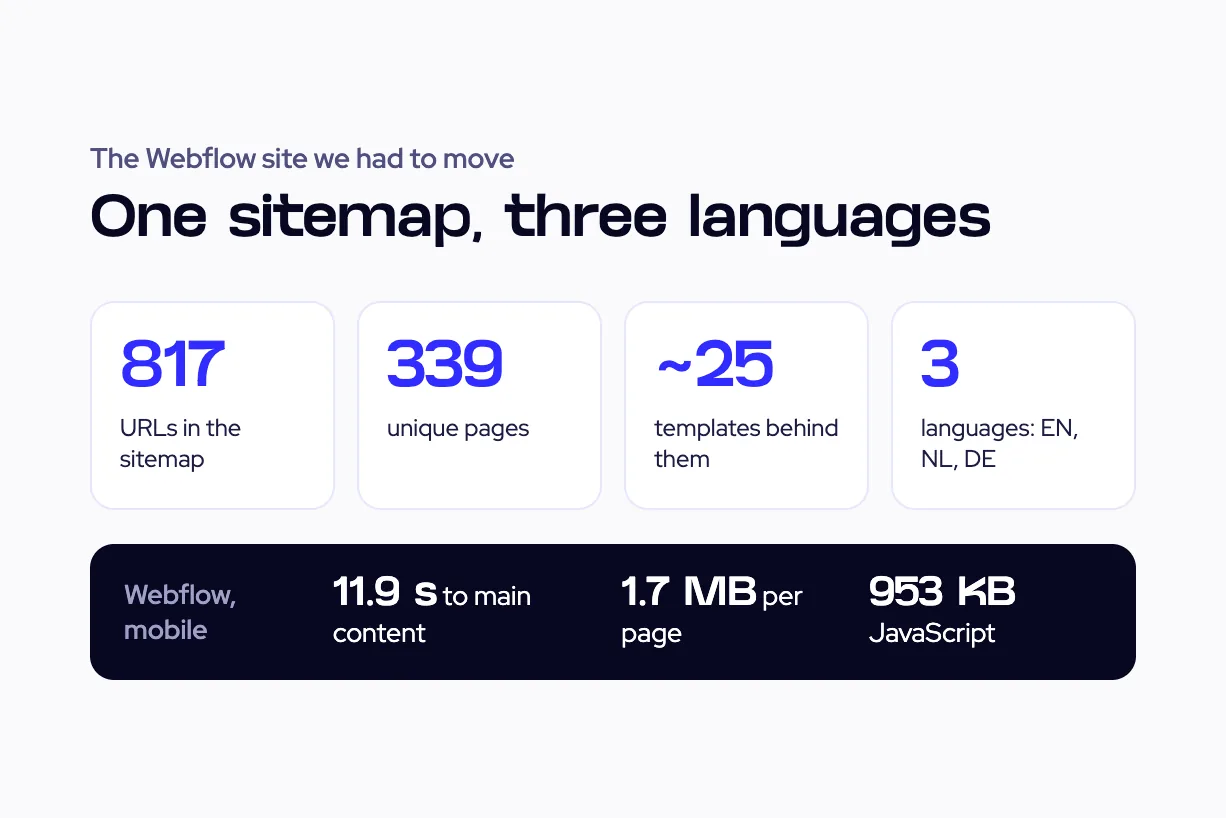
Webflow was the right choice for our website for years. By 2026 it was slowing us down. Every case study used the same CMS template, so changing one meant changing all of them. New pages waited for the one person who knew the Webflow CMS. And on mobile, the main content took almost 12 seconds to show up.
The move itself wasn't small: 817 URLs in English, Dutch and German, with rankings, ad tracking and cookie consent that couldn't break on the day we switched.
- 817 URLs and 339 pages behind about 25 templates
- 86 pages only in English, 21 only in Dutch and German
- GA4, Google Ads, Clarity and the OpenAI Ads pixel, all behind consent
Solution
We didn't start with code. We started with a list: every URL by language, every template, and every page nobody needed anymore. Then we rebuilt the site in Next.js, template by template. Claude Code wrote most of the code. People checked every page against the old one.
- Static Next.js on Vercel, so search engines and AI crawlers get the full text in the HTML
- An SEO migration plan: titles and descriptions kept, Webflow's 301 redirects carried over
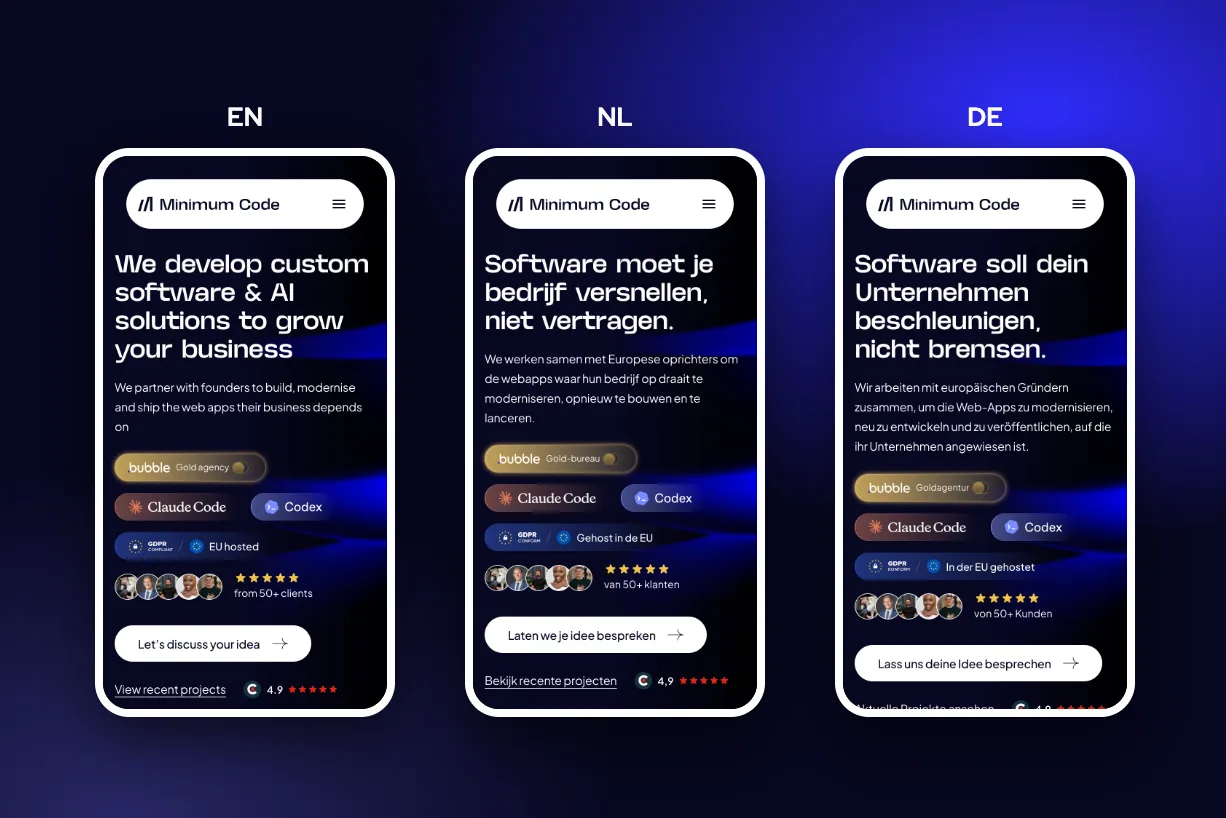
- English, Dutch and German linked on every page, missing translations written
- One consent banner for all tracking
- Content as files in our own GitHub
- Webflow kept live as a rollback until we were sure
Results
The new site went live on 28 September 2026, 19 days after we signed the scope. On mobile the main content now shows in 2.5 seconds instead of 11.9, and Lighthouse gives 100 for accessibility, best practices and SEO.
The part we care about more: anyone on the team can change the site with Claude Code. The change goes in as a pull request, gets reviewed, and is live about two minutes after the merge. Webflow is cancelled.