
Your app works, but you are not sure what is happening behind the scenes. Perhaps another team built it, development has slowed down, or AI helped produce code that nobody has properly reviewed. Now you want to add features, hire new developers or prepare for launch. Before spending more, you need to know what you are working with.
A code audit service examines an existing application for problems that could affect security, reliability or future development. The point is not to collect technical warnings. It is to understand which issues matter to your product, what can wait and whether the software can support your next move. Here is what to look for when commissioning a review, from scope and cost to the decisions that follow.
What is a code audit service, and when do you need one?
A code audit is a focused assessment of the software you already have. The scope may include source code, application architecture, dependencies, tests and the systems needed to run the product. Unlike a routine review of a recent change, an audit looks at a defined part of the existing application to answer a broader question about its condition.
The right time is usually before an expensive decision: launching to paying customers, handing the product to a new team, expanding a fragile feature or deciding whether to rebuild. An audit can also help when recurring bugs or slow releases suggest a deeper problem. The aim is to avoid paying for new development on top of an issue nobody has diagnosed.
The depth of the review depends on the product. A prototype shown to a handful of people has different risks from an app that handles payments or stores customer data. For an MVP, concentrate on the workflows the first customers will rely on rather than demanding an exhaustive assessment of features that are not yet planned.
Sometimes a full audit is unnecessary. If one failure is well understood and confined to a single area, a shorter diagnostic investigation may be enough. The useful question is: what decision will this work allow you to make that you cannot make today?
What should a code audit cover?
Start with what the application does, where it runs and which parts would cause the most trouble if they failed. A reviewer may need the repository, database structure, hosting configuration, integration details and an explanation of the business rules. The proposal should state which of those systems are included. These are the main areas worth discussing before you compare offers:
Review area | Evidence to request in the proposal |
|---|---|
Source code and architecture | Which application components will be inspected and how structural concerns will be assessed. |
Security | Which permissions, data flows and sensitive operations are included, with the review method stated. |
Performance | Which workflows will be investigated and whether conclusions include measurements or code inspection alone. |
Tests and release process | Which existing checks and deployment arrangements will be examined. |
Findings and follow-up | Report format, explanation session, repair estimates and any included retesting. |
Be precise about the methods. Reading the code is not the same as testing a running application. A security-focused code review does not automatically include penetration testing, and identifying a possible performance bottleneck is not the same as measuring it under load. If either type of testing matters to the decision, it needs to be agreed separately.
The review also needs a defined version of the software. Without that, findings can become difficult to interpret after more changes are deployed. Record what the auditor could inspect, what remained inaccessible and which conclusions depend on further investigation.
Security, permissions and sensitive data
Start with the parts of the app that control who can do what. Authentication verifies identity; authorisation decides which records and actions a user is allowed to access. Problems in either can expose private information or let one customer change another customer's data. Credentials, integrations and sensitive data flows also deserve attention when they are within scope.
A feature can look correct in the interface and still be insecure. This is a recurring concern with AI-generated code vulnerabilities: generated implementations may satisfy the expected user journey while missing checks for unexpected requests. Automated scans can help find candidates for investigation, but someone must confirm whether a warning represents a real risk in this application.
Architecture and maintainability
Poorly organised code rarely announces itself as a single obvious bug. The symptoms may be duplicated business rules, changes that break unrelated features, unclear dependencies or new developers spending days understanding a small task. The auditor should connect these problems to actual development costs or risks, not merely recommend a different coding style.
The same applies to applications assembled through vibe coding or rapid AI-assisted development. Generating a working feature is not proof that the code is easy to maintain. A useful assessment establishes whether a developer can understand the system, change it safely and explain the behaviour of its most important parts.
Not every untidy component needs rewriting. If an old module works reliably and is unlikely to change, restructuring it may have little immediate value. Prioritise architecture problems that block planned features, introduce repeated defects or make critical operations difficult to verify.
Testing, performance and deployment
The reviewer should examine the tests the team already relies on, particularly around sign-in, permissions, payments and other essential journeys. A large test count means little if important failures are never exercised. Missing tests may be a more urgent problem when a major change is planned than when a stable area is being left alone.
Performance concerns need a similar distinction. An unusually slow screen is a measurable problem; a query that looks inefficient in code is a potential problem until its impact is established. A useful finding explains what was observed, under which conditions and whether customers are affected today.
Deployment also matters. Check whether the team can release changes, roll them back and recover from failures. These operational details can be more important to a founder than an elegant internal code structure, especially when the app is already live.
What should a code audit report contain?
You do not need a particular report template. You need conclusions that a founder can understand and a developer can act on. Before commissioning the review, agree how findings will be explained, how uncertainty will be recorded and whether there will be a discussion of the results.
For each important issue, look for three things: where the problem occurs, evidence that it exists and the likely consequence if it is left alone. The report should also indicate what kind of corrective work may be needed. A vague warning such as 'improve the architecture' is not enough to approve a budget.
Confirmed defects should be separated from suspected risks and optional improvements. A reviewer may identify something that warrants further testing without being able to call it a proven vulnerability. That distinction protects you from funding an expensive repair on the strength of an assumption.
By the end of the review, you should know which problems affect your next release, which can wait and which questions still need answering. Ideally, your current developer or a replacement team can use the findings without having to repeat the investigation. The exact deliverables will depend on the scope you agree with the provider.
How much does a code audit cost?
There is no useful single price for a code audit. Reviewing a small, self-contained app is different from investigating several repositories, a production database, payment integrations and a complicated deployment setup. A low fixed fee can be reasonable for a narrow check and misleading if you expect a full technical assessment.
The biggest cost drivers are the size and condition of the codebase, the number of connected systems, how easy it is to obtain access and the depth of validation required. Security testing, performance measurements and investigation of hard-to-reproduce defects can add substantial work. Clear documentation and an available technical contact can reduce time spent simply figuring out how the application works.
Compare quotes on equivalent scope, not headline price alone. Check whether the fee covers investigation, validation of findings, a written summary, a handover discussion and any follow-up questions. Repairs and retesting may be separate engagements. Get that distinction in writing before work begins.
Turnaround depends on more than the number of days a reviewer needs. Missing credentials, undocumented dependencies and unanswered product questions can delay the work. If you have a launch or investment deadline, say so early and agree which serious discoveries should be raised before the final discussion. We would not quote a universal timeline without knowing the application.
How to choose a code audit provider
Start with experience relevant to the technology and the decision you face. A team that knows your framework may be able to find implementation problems quickly, but the reviewer also needs to explain how those problems affect the business. Speak to the person who will own the assessment, not just the person selling the service.
Ask for a defined scope and method: which parts of the app will be examined, how findings will be checked and what is excluded. If the provider uses AI analysis or external scanning tools, understand what code or customer data they receive. Make sure access is limited to what the work needs and can be removed when the engagement ends.
Give competing providers the same short brief. Describe the users, critical workflows, known defects and changes planned for the next release. Include current documentation if it is accurate, and identify who controls the repository, database, hosting and integrations. An auditor cannot assess an unavailable system; any gaps should be explicit in the final conclusions.
If the auditor also offers to fix the issues, that can be useful: they already understand the product. But the assessment and any implementation proposal should remain distinguishable. You need to be free to keep working parts of the software and obtain a second opinion before approving a large rebuild.
What happens after the audit?
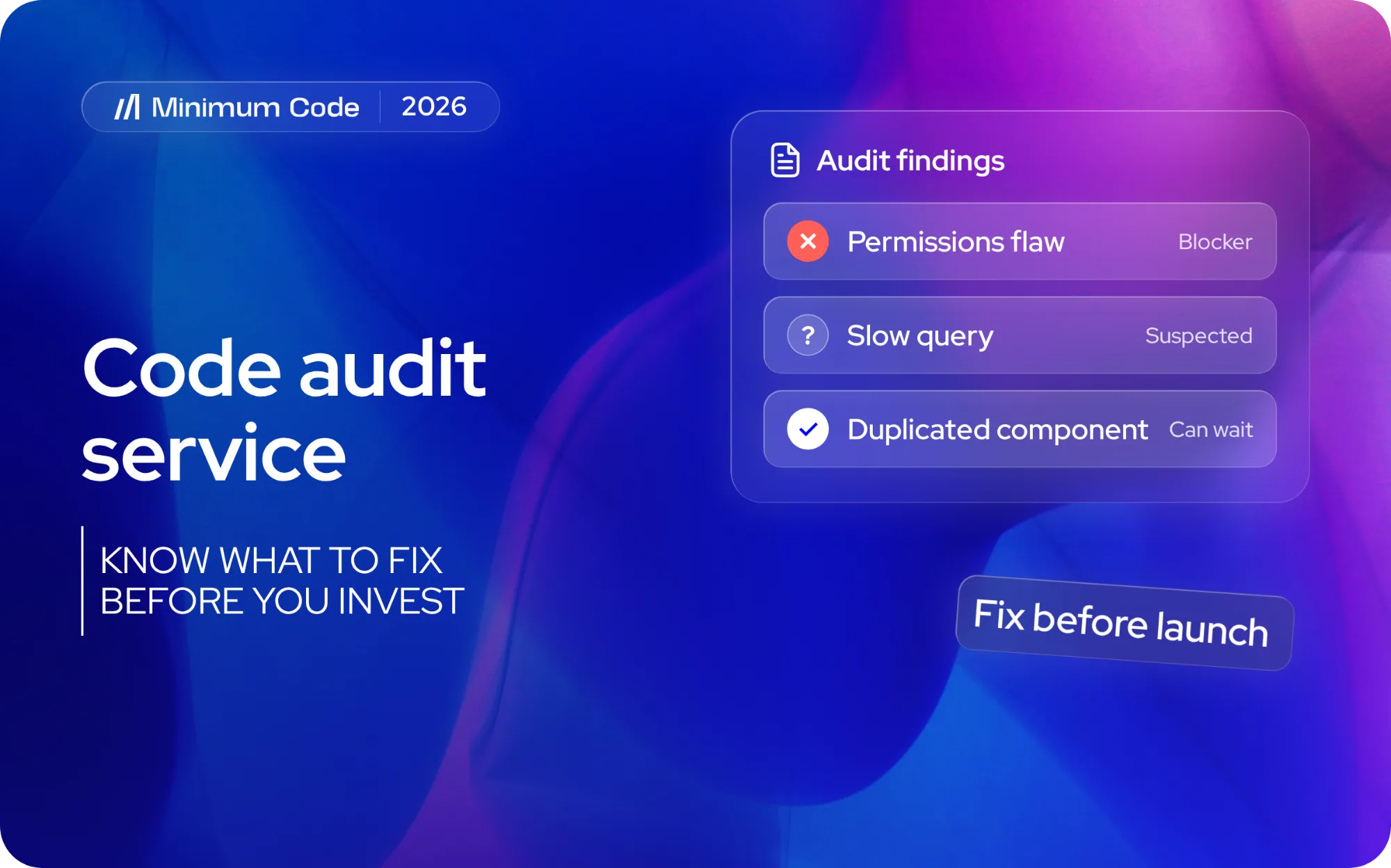
The next step is not necessarily a rewrite. First, separate blockers from improvements that can be scheduled later. Assign ownership to the issues you decide to address and establish how each fix will be checked. A serious permissions flaw may need attention before launch; a duplicated component may only matter when the team next changes that area.
For anything expensive, compare the cost and risk of a targeted repair with those of replacing the affected part of the application. A recommendation to rebuild should explain what the existing system cannot reasonably support, not rest on the fact that another technology is newer or more fashionable.
Keep the findings available to whoever will maintain the app. The underlying evidence, unresolved questions and consciously deferred problems matter more than a polished presentation. They prevent a new developer from repeating the same investigation or treating every previous decision as settled.
Finally, make verification part of the repair budget. A fix is not finished because a developer changed the code: the relevant behaviour needs checking again. If the audit exposed uncertainty that cannot yet be resolved, agree what additional investigation would be needed rather than turning a guess into an open-ended project.
How Minimum Code audits and improves existing applications
Minimum Code works with teams that need to improve an existing application as well as those building a new one. Its legacy application modernisation work begins by examining the current system and identifying what can be retained, repaired or replaced. The practical value for a founder is being able to discuss improvements before committing to a full rebuild.
The audit covers the application's critical workflows, architecture, integrations, data structures, user roles, performance constraints and security risks before any change is recommended. It ends with a prioritised, phased roadmap and delivery estimates, so you can see what to fix first, what can be scheduled later and what each step is likely to cost.
The same team can then take the plan through implementation, testing and release. That is useful when the people who found a problem also understand how to fix it, but you are free to take the roadmap to your current developer or another team instead.
For a code-based app, the first conversation should establish what needs investigating and whether Minimum Code is the right fit for that scope. If the problems turn out to require development or modernisation, the team can discuss those separately. The assessment should help you make that decision, not commit you to work before the problems are understood.
Frequently asked questions
Can AI perform the code audit?
AI can help scan code, trace dependencies and identify possible defects. It cannot establish that every finding is real or that a product is safe to release. Someone with the relevant engineering knowledge still needs to assess the evidence, check the business rules and take responsibility for the conclusions.
Does an audit guarantee that the software is secure?
No. An audit provides a view of the agreed systems and software version. It may not include live penetration testing, infrastructure outside the specified scope or every possible failure. A provider should be clear about those limits rather than imply that a clean report is a security guarantee.
Does finding technical debt mean we need a rebuild?
Not necessarily. Some technical debt has little effect on customers or planned development; other issues make even small changes risky. The decision to rebuild should follow a comparison of repair costs, remaining risks and the future requirements of the app.
Should the current developer take part?
Often, yes. The existing developer can explain decisions, show how the app works and help the auditor gain access. The independent reviewer should still be able to assess the evidence and document disagreements instead of relying solely on the original developer's view.
If you are about to invest more in an existing app and are unsure what needs fixing, contact Minimum Code to discuss the product and the type of assessment that would help. Start with the decision you need to make; the scope can follow from there.

Written by Tom
Founder and Lead Developer

Ready to start your project?
Book a free discovery call to learn how we can build your app in 4 weeks, or less.
Book a call